Periprosthetic Fractures
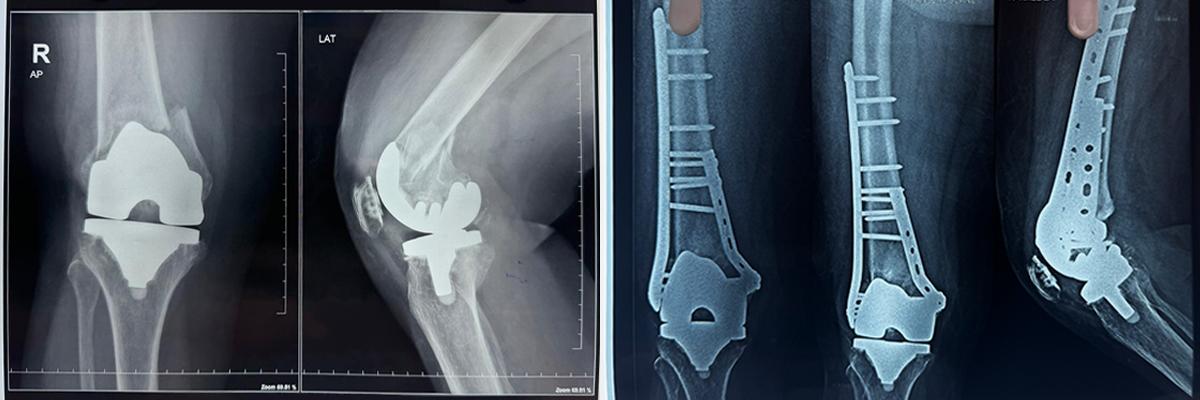
Understanding Fractures Around Artificial Joints and Their Complex Treatment
8 Key Facts About Periprosthetic Fractures
1. Fractures Around Joint Implants
A Periprosthetic Fracture refers to a bone fracture that occurs around a previously implanted artificial joint, such as a Total Knee Replacement (TKR) or Total Hip Replacement (THR).
2. Causes: Falls, Stress, or Osteoporosis
These fractures are commonly caused by falls, but can also result from excessive stress on the bone or underlying conditions like Osteoporosis, especially in elderly or post-operative patients.
3. Evaluating Implant Stability Is Critical
A vital part of diagnosis is determining whether the implant (prosthesis) is stable or loose. This assessment directly influences the treatment plan.
4. Stable Implant? Fracture Can Be Fixed
If the implant is well-fixed and stable, Orthopaedic Surgeons may proceed with internal fixation of the fracture using plates, screws, or rods without replacing the implant.
5.Loose Implant Requires Revision Surgery
If the implant is loose or unstable, both the fracture and the prosthesis must be addressed. A longer, specially designed revision implant is used to bypass the fracture and restore stability.
6. Complexity Higher Than Regular Fractures or Replacements
Periprosthetic Fractures require longer surgeries, place more stress on the body, and often involve a slower rehabilitation period compared to standard fractures or primary joint replacement procedures.
7. Increased Treatment Costs and Resources
Due to the use of specialised implants, extended hospital stay, and complex surgical procedures, the cost of treatment is typically higher than that of routine Orthopaedic surgery.
8. Prevention Is Key After Joint Replacement
Preventing such fractures is crucial for patients with joint replacements. This includes:
Fall-proofing the home environment
Strengthening core and leg muscles through Physiotherapy
Using walking aids when needed
Managing Osteoporosis through regular check-ups and medications