Revision Knee Replacement
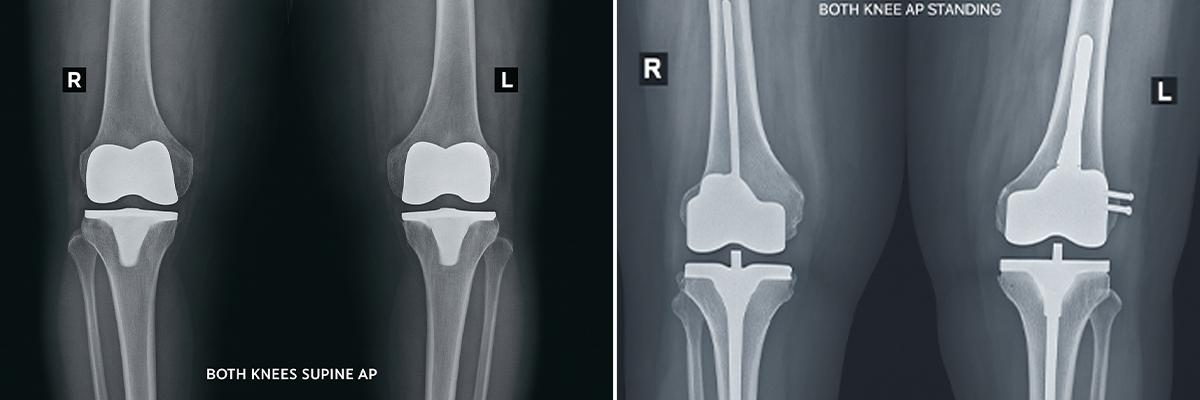
Essential Insights into Second-Time Knee Replacement Surgery
8 Key Facts About Revision Knee Replacement
1. Removal and Replacement of the Old Implant
Revision knee replacement involves removing a previously implanted artificial knee joint and replacing it with a new, advanced implant to restore function and stability in the joint.
2. Common Reasons for Revision Surgery
The most frequent causes for Revision Knee Replacement include aseptic loosening, joint infection, implant instability, and periprosthetic fractures involving the original implant.
3. Stronger Implants for Compromised Bone & Ligament Support
During revision surgery, some bone and ligament support may be compromised. Hence, Surgeons use more constrained implant designs that offer enhanced stability for weakened joints.
4. Two-Stage Surgery for Infected Knees
In cases of joint infection, a two-stage revision procedure is performed. First, the infected implant is removed, the area is cleaned, and an antibiotic-loaded cement spacer is inserted. After 6–8 weeks, the spacer is removed and the new implant is placed during the second surgery.
5. Single-Stage Revision for Non-Infectious Cases
For cases not involving infection, revision surgery can often be completed in a single stage, ensuring quicker recovery and reduced surgical exposure.
6. Selective Component Revision Possible in Early Infections
In early-stage infections or minor implant issues, only the polyethylene insert may need to be replaced after debridement, avoiding full component revision.
7. Patient Optimisation Is Crucial
Since revision surgery is more complex and time-intensive than Primary Knee Replacement, Patients must be medically optimised beforehand to ensure safety and a successful outcome.
8. Highly Constrained Implants Have Reduced Longevity
More constrained knee implants offer greater stability but may have a shorter life span compared to less constrained designs. Careful selection based on Patient condition is essential.